

By using our website, you agree to the use of cookies as described in our Cookie Policy
Why Trauma-Informed Care Is So Important in LGBTQIA2+ Recovery
Most people think recovery is just about quitting something harmful. Stop the behavior, fix the problem. But for LGBTQIA2+ individuals, the roots run deeper — and if treatment doesn't account for that, you're setting people up to fail. Recovery isn't just about what someone's struggling with today. It's about the years of rejection, violence, and erasure that brought them here. Especially when trauma is baked into every stage of their story.
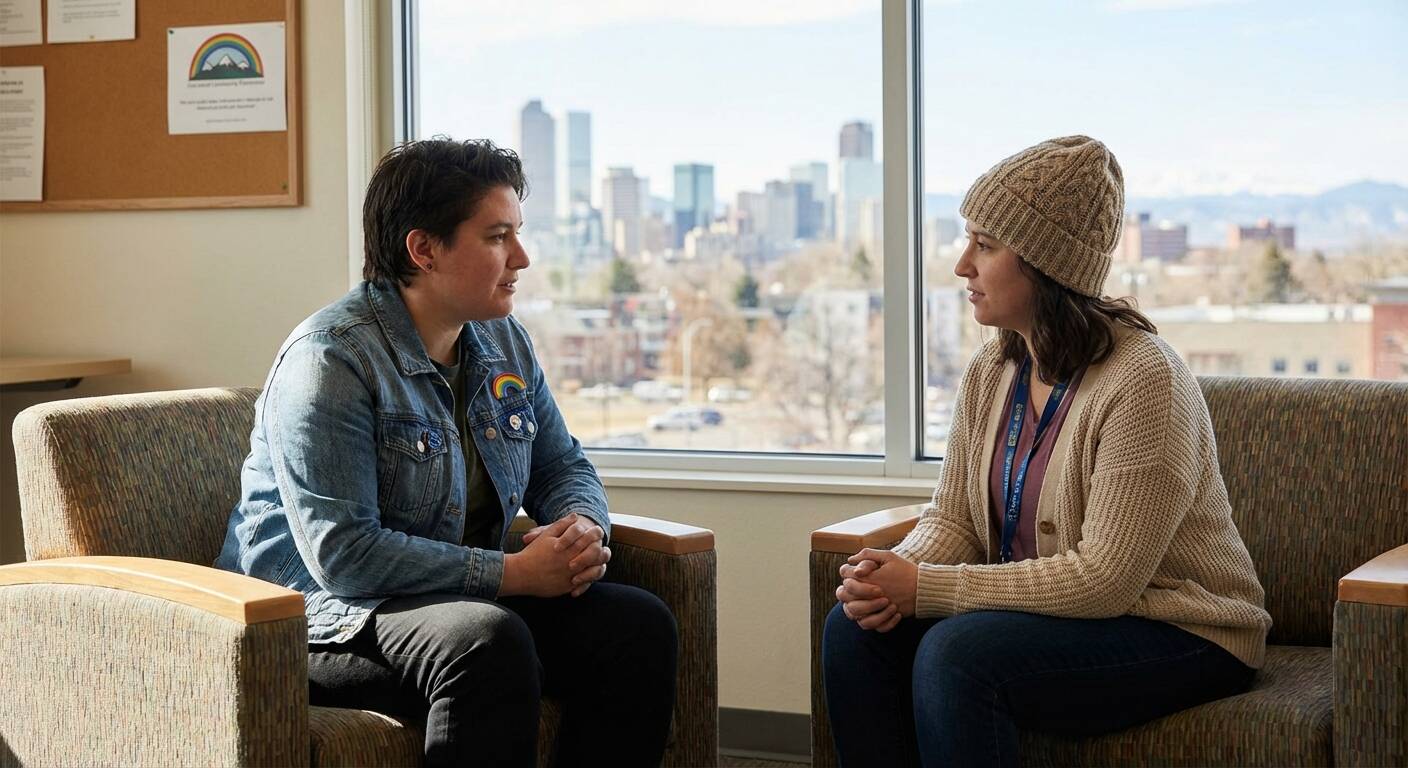
So here's what matters. If you're building a recovery program or supporting someone through one, trauma-informed care isn't a nice-to-have. It's the foundation. Every interaction should acknowledge harm. Every policy should prioritize safety. And every decision should be grounded in what the person needs to heal — not just what looks good on paper.
The Weight LGBTQIA2+ People Carry Into Treatment
Trauma doesn't always come from one catastrophic event. For LGBTQIA2+ folks, it's often cumulative — a thousand small cuts that add up over time. Bullying in middle school. Getting kicked out at sixteen. Losing a job because someone found out. Being told by a therapist that who you are is the problem. These aren't isolated incidents. They're patterns that shape how someone sees the world and whether they believe they deserve help.
The data backs this up. LGBTQIA2+ individuals face higher rates of depression, anxiety, substance use disorders, and suicidal ideation than the general population. But that's not because of their identity. It's because of how society responds to it. Marginalization creates trauma. Trauma fuels crisis. And crisis without the right support becomes a cycle that's hard to break.
What Trauma-Informed Care Actually Means
Trauma-informed care flips the script. Instead of asking "What's wrong with you?" it asks "What happened to you?" It's a framework built on understanding that trauma affects everyone differently and that healing requires more than clinical intervention. SAMHSA lays out six core principles that guide this approach, and they're not abstract concepts — they're practical shifts in how care gets delivered.
- Safety in every space, physical and emotional
- Trustworthiness through transparency and consistency
- Peer support that validates lived experience
- Collaboration where power is shared, not hoarded
- Empowerment that restores voice and choice
- Cultural humility that honors identity and history
For LGBTQIA2+ people, these principles aren't optional. They're the difference between a program that heals and one that harms.
Why Standard Care Models Fall Short
Traditional treatment wasn't designed with LGBTQIA2+ experiences in mind. Too often, it ignores the role of identity-based trauma or worse, pathologizes it. We've seen this play out in real time — clients misgendered in intake forms, providers who don't understand chosen family structures, programs that assume heterosexual relationship dynamics. When care doesn't reflect someone's reality, it doesn't just miss the mark. It retraumatizes.
Trauma-informed care closes that gap. It trains providers to recognize how discrimination, rejection, and violence shape mental health and substance use. It builds environments where LGBTQIA2+ individuals don't have to explain themselves or defend their existence. And it creates space for healing that's grounded in respect, not judgment.
The Pieces That Make Trauma-Informed Care Work
Want to build a program that actually serves LGBTQIA2+ people? You'll need more than a rainbow flag in the lobby. Trauma-informed care requires structural change — policies, training, and culture shifts that go beyond surface-level inclusion.
- Staff training on LGBTQIA2+ identities, trauma, and affirming language
- Intake processes that respect pronouns, chosen names, and privacy
- Clinical approaches that address minority stress and internalized stigma
- Peer support networks led by LGBTQIA2+ individuals in recovery
- Policies that protect against discrimination and ensure confidentiality
If any piece is missing, the whole system weakens. And if the people you're serving don't feel safe, they won't stay long enough to heal.
Intersectionality Compounds the Need
LGBTQIA2+ identity doesn't exist in a vacuum. Many people also navigate racism, ableism, poverty, or immigration status. Each layer adds complexity to their trauma and their recovery. A Black trans woman faces different barriers than a white gay man. A queer immigrant with limited English faces different risks than someone born here. Trauma-informed care has to account for all of it.
That means listening more than assuming. It means recognizing that one-size-fits-all treatment doesn't work when people's experiences are this varied. And it means building flexibility into programs so they can meet people where they are, not where a manual says they should be.
Trust Is Earned, Not Assumed
Most LGBTQIA2+ people have been let down by systems that were supposed to help them. Family services that didn't protect them. Schools that didn't intervene. Healthcare providers who refused care or delivered it with contempt. By the time someone walks into a recovery program, they've learned not to trust easily. And they shouldn't have to.
Trauma-informed care earns trust through consistency. Providers show up the same way every time. Policies are transparent. Boundaries are clear. And when mistakes happen — because they will — there's accountability. Trust isn't built overnight, but it's the only way recovery sticks.
Empowerment Breaks the Cycle
Trauma strips people of control. Recovery has to give it back. That means involving LGBTQIA2+ individuals in their own treatment plans, not dictating what they need. It means offering choices, not ultimatums. And it means validating their expertise about their own lives.
- Let clients set their own goals and timelines
- Offer multiple pathways to recovery, not a single rigid model
- Include LGBTQIA2+ voices in program design and evaluation
- Respect decisions even when they don't align with clinical recommendations
- Celebrate progress in all its forms, not just abstinence or symptom reduction

What Happens When Care Gets It Right
Trauma-informed care doesn't just reduce harm. It creates conditions for real transformation. LGBTQIA2+ individuals who receive affirming, trauma-informed support are more likely to complete treatment, maintain recovery, and rebuild their lives. They're also more likely to reconnect with community, pursue education or employment, and develop healthier relationships.
But the benefits go beyond individual outcomes. When programs get this right, they shift culture. They model what inclusive care looks like. And they prove that recovery is possible for everyone — not just the people who fit neatly into outdated frameworks.
Where Programs Still Miss the Mark
Even well-meaning organizations stumble. Some common pitfalls derail progress before it starts, and most of them are avoidable with the right attention and accountability.
- Assuming all LGBTQIA2+ people have the same needs or experiences
- Tokenizing queer staff without giving them decision-making power
- Offering "LGBTQIA2+ friendly" care without trauma-informed training
- Ignoring feedback from clients about what's not working
- Treating identity as a side issue instead of central to treatment
These mistakes aren't just frustrating. They're dangerous. They push people away from care and reinforce the idea that systems can't be trusted.
Building Programs That Last
Trauma-informed care for LGBTQIA2+ recovery isn't a one-time training or a checklist. It's an ongoing commitment to learning, adapting, and centering the people you serve. That means hiring diverse staff. It means updating policies as understanding evolves. And it means staying accountable to the community, not just to funders or accreditors.
Programs that do this work well don't just survive — they thrive. They become places where people feel safe enough to be vulnerable, strong enough to heal, and hopeful enough to imagine a different future. That's not idealism. That's what happens when care is designed with intention and delivered with respect. And it's what every LGBTQIA2+ person in recovery deserves. Organizations like Over the Rainbow Project demonstrate this commitment through comprehensive services that include behavioral health support, substance Recovery support, life skills training, and specialized LGBTQ coaching that centers trauma-informed principles in every aspect of care.
Let’s Build a Safer Path Forward Together
We know that true healing for LGBTQIA2+ individuals starts with care that honors every part of your story. If you’re ready to experience support that puts your safety, dignity, and voice first, let’s connect. Call us at 720-580-2696 to talk with our team, or book an appointment and take the next step toward recovery that truly fits you.
‹ Back
Recent Posts
-
-

-

-

Can Recovery Coaching in Denver Help You Stay on Track?
April 17, 2026
-

Is Outpatient Rehab in Denver the Right Fit for You?
April 3, 2026