

By using our website, you agree to the use of cookies as described in our Cookie Policy
What Does a Day in IOP Look Like in Denver?
Intensive Outpatient Programs aren't about locking yourself away from the world. They're about showing up, doing the work, and still making it to your job or your kid's soccer game. Denver's IOP landscape reflects that balance — structured enough to create real change, flexible enough to fit into a life that's already demanding your attention. But if you've never been through one, the day-to-day can feel like a mystery. And mysteries don't help when you're trying to decide if this is the right move.

So let's break it down. What actually happens during those hours? What should you expect when you walk through the door? And how does Denver's approach differ from the cookie-cutter programs you might find elsewhere? The answers matter because commitment starts with clarity.
The Morning Kickoff Sets the Tone
Most Denver IOPs start their sessions in the morning, though plenty offer afternoon or evening slots for people juggling work schedules. The day typically opens with a group check-in — not some forced icebreaker, but a genuine moment to gauge where everyone's at. Participants share what's weighing on them, what they're working through, and what they need from the group that day. It's accountability without judgment, and it builds the kind of trust that makes the harder conversations possible later.
After check-in, many programs move into mindfulness or grounding exercises. Denver's wellness culture shows up here — think breathing techniques inspired by high-altitude air or visualizations that pull from the Rockies. It's not fluff. These practices help participants settle their nervous systems and prepare mentally for the therapeutic work ahead. You can't process trauma or rewire thought patterns when your brain's still stuck in fight-or-flight mode.
Group Therapy Is Where the Real Work Happens
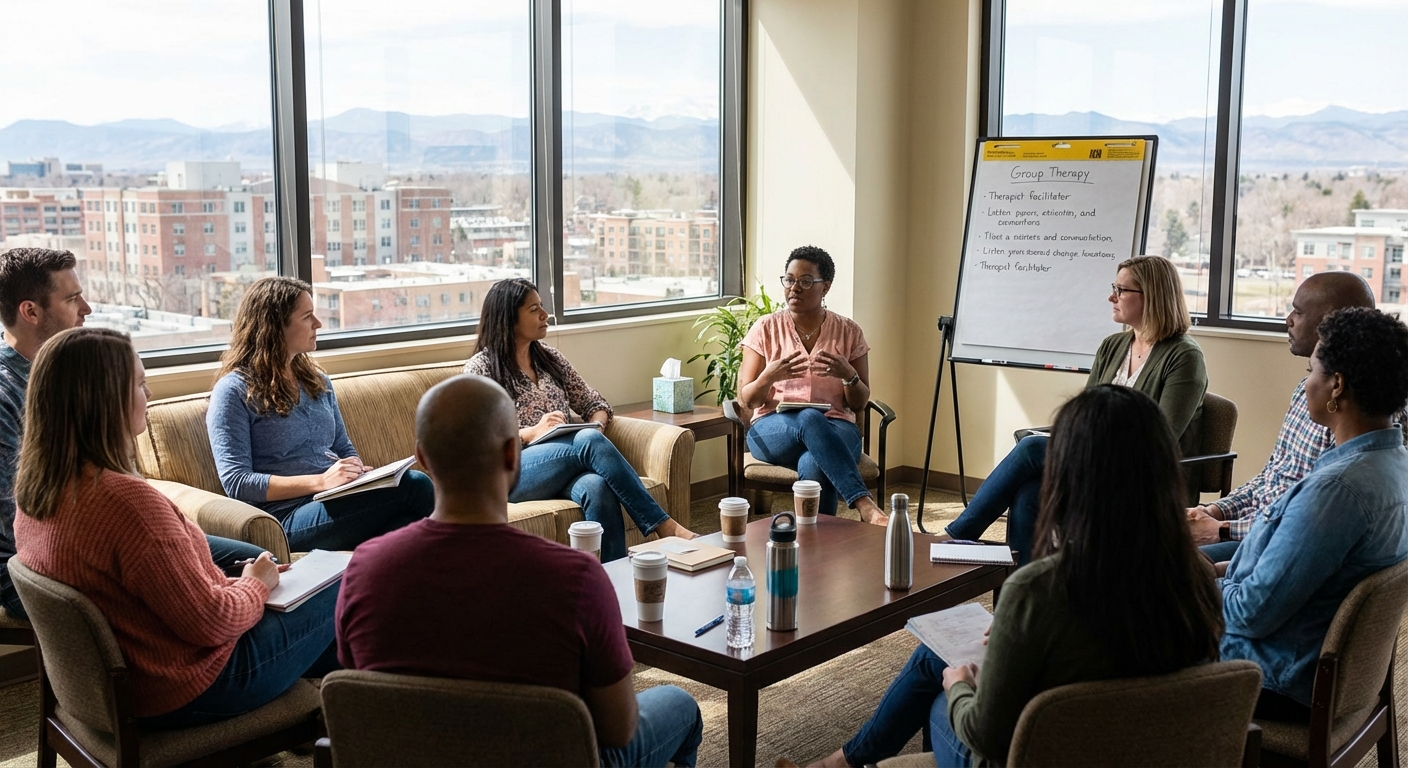
The heart of any IOP is group therapy, and Denver programs lean into it hard. Licensed therapists lead sessions that tackle everything from relapse prevention to emotional regulation, communication skills to coping strategies. The format varies — sometimes it's discussion-based, sometimes it involves role-playing or interactive exercises — but the goal stays the same. You're learning from others who get it, and you're contributing to their progress too.
Denver IOPs tend to favor evidence-based modalities like Cognitive Behavioral Therapy, Dialectical Behavior Therapy, and Acceptance and Commitment Therapy. These aren't abstract theories. They're practical frameworks for identifying destructive thought patterns, building healthier responses, and developing resilience that lasts beyond the program. Expect to be challenged. Expect to feel uncomfortable. That's where growth lives.
Psychoeducation workshops often fill out the midday block. These sessions cover the science of addiction, mental health disorders, medication management, and the neurobiology of recovery. Knowledge is power, especially when you're making decisions about your treatment plan or long-term wellness strategy. The more you understand what's happening in your brain and body, the better equipped you are to navigate the road ahead.
Individual Sessions Dig Deeper
Group therapy handles the shared experience, but individual sessions tackle the personal stuff. Most Denver IOPs schedule one-on-one time with your assigned therapist once or twice a week. This is where you unpack trauma, explore co-occurring disorders, or address issues that don't fit neatly into a group setting. It's also where your treatment plan gets fine-tuned based on what's working and what's not.
Specialized groups often run in the afternoon. These might include gender-specific sessions, trauma-informed care, family therapy, or holistic wellness activities like yoga and art therapy. Denver's access to outdoor spaces means some programs incorporate nature walks, hiking, or mindfulness exercises in parks. It's not just about getting fresh air — it's about using the environment as a therapeutic tool. Movement and nature have a way of unlocking things that sitting in a room sometimes can't.
Wrapping Up and Looking Ahead
As the day winds down, most programs circle back for a final check-out session. Participants reflect on what they learned, share wins, and talk through any lingering struggles. Setting intentions for the evening and the next day keeps momentum alive and reinforces the skills practiced during the session. It's a small ritual, but it matters. Recovery isn't built in grand gestures — it's built in daily commitments.
For those attending evening IOPs, the structure mirrors the morning and afternoon programs. The flexibility is intentional. Denver's IOPs recognize that people have jobs, families, and responsibilities that don't pause for treatment. The goal is to make recovery accessible without forcing you to dismantle your entire life to get there.
What Happens After You Leave
The work doesn't stop when the session ends. Denver's recovery community is deep, with support groups, sober activities, and wellness resources scattered across the city. Many IOPs encourage or facilitate participation in 12-step meetings, SMART Recovery, or other peer-led groups. This ongoing connection reinforces what you're learning in IOP and builds a network that supports long-term sobriety and mental health stability.
Some programs also offer alumni groups or continuing care plans. These aren't mandatory, but they're there if you need them. The transition from intensive treatment to independent recovery can be rocky, and having a safety net makes a difference. Denver's programs understand that recovery isn't linear, and they build in support for the inevitable bumps along the way.
The Structure That Makes It Work
A typical IOP day in Denver includes several key components that work together to create lasting change. Here's what you can expect to encounter:
- Group check-ins that establish accountability and build community from day one
- Mindfulness and grounding exercises tailored to Denver's wellness-focused culture
- Evidence-based group therapy using CBT, DBT, and ACT frameworks
- Psychoeducation workshops covering addiction science, mental health, and medication management
- Individual therapy sessions for personalized treatment and trauma work
Specialized Support You Might Not Expect
Denver IOPs often go beyond the standard therapy model. Depending on the program, you might also have access to:
- Gender-specific groups that address unique challenges and experiences
- Trauma-informed care designed for those with PTSD or complex trauma histories
- Family therapy sessions that repair relationships and build healthier communication patterns
- Holistic wellness activities like yoga, art therapy, and outdoor excursions
- Medication-assisted treatment coordination for those managing co-occurring disorders
Skills You'll Actually Use
The point of IOP isn't just to talk about your problems — it's to build a toolkit you can use when life gets hard. Here are some of the practical skills Denver programs emphasize:
- Relapse prevention strategies that identify triggers and create action plans
- Emotional regulation techniques for managing anxiety, anger, and depression
- Communication skills that improve relationships at home and work
- Coping mechanisms that replace destructive behaviors with healthier alternatives
- Stress management practices that keep you grounded during high-pressure moments
The Community Piece You Can't Ignore
Recovery doesn't happen in isolation, and Denver's IOP programs know it. Beyond the structured sessions, you'll find a thriving support network that includes:
- 12-step meetings and SMART Recovery groups throughout the metro area
- Sober social activities like hiking groups, coffee meetups, and volunteer opportunities
- Alumni networks that keep you connected to people who've been through the same program
- Continuing care plans that provide ongoing support after IOP ends
- Peer mentorship opportunities for those ready to give back
What Makes Denver Different
Denver's IOP programs reflect the city's broader culture — active, wellness-oriented, and community-driven. You'll find elements here that don't show up everywhere:
- Outdoor therapy options that leverage Colorado's natural landscape
- Holistic wellness integration, from nutrition counseling to fitness programs
- Flexible scheduling that accommodates Denver's active workforce
- Strong ties to the local recovery community and sober living resources
- A focus on long-term wellness, not just short-term symptom management
Showing Up Is the Hard Part
A day in Denver's IOP is structured, demanding, and designed to push you toward real change. It's not passive. It's not easy. But it's also not about perfection — it's about progress. Every session builds on the last, every skill gets reinforced, and every connection you make strengthens your foundation. The flexibility means you don't have to choose between recovery and the rest of your life. The structure means you're not left guessing what comes next. And the community means you're never doing it alone. That's what makes it work. If you're ready to explore behavioral health options that fit your life, substance recovery support is available through comprehensive programs that include case management and life skills training to support your journey.
Ready to Take the Next Step?
We know that starting something new can feel overwhelming, but you don’t have to figure it out alone. Let’s talk about how our Denver IOP can fit into your life and help you move forward. Give us a call at 720-580-2696 or book an appointment today so we can support you on your path to lasting change.
‹ Back
Recent Posts
-
-
-

What Does a Day in IOP Look Like in Denver?
May 15, 2026
-

-

Can Recovery Coaching in Denver Help You Stay on Track?
April 17, 2026